
Reform and resistance in the shadow of a disaster
Letter from the Convenor
Dear friends and comrades
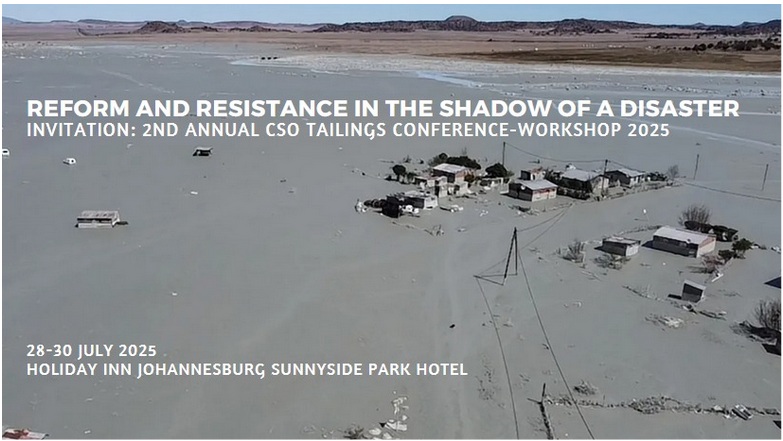
Over the months we have worked well together emphasising the importance of building a strong local community organisation. This 2nd Annual Tailings Workshop – Conference organised under the theme, Reform and resistance in the shadow of a disaster is in part a conclusion of one aspect of our work. It also marks the beginning of a new and improved programme of action.
The legal process around the Mining Bill and the policy around Strategic Minerals Strategy is part of a process and not an event that ends after we leave for our homes and townships.
Mining Bill
As indicated in other correspondences with you, that the webinar was organised by the Centre for Environmental Rights is a useful overview of the Bill.
There is still time to listen to this discussion:
Zoom Link (Passcode: @gj2rfG8)
It follows that we are really angry amidst all the talk of National Dialogue how the government has permitted the department of mineral resources, seen as a super ministry or department to do as they please.
Mining impacted and affected communities and those who work with them, have always struggled for a voice but the experience has shown us that the corporations and governments have refused to listen. If they did, they would have answered the findings and recommendations of the SAHRC convened National Hearing on the Underlying Socio-economic Challenges of Mining-affected Communities in South Africa (2018),
This report is fantastic and touches on issues that the bill ignores. It emphasized that corporations must obtain community consent, or face legal action and or protest actions if they fail to conduct proper consultations. The hearings found that what constituted meaningful consultation had to be streamlined and agreed upon especially when corporations come to apply for licenses. In addition, they warned that consultation should never be a tick-box exercise. Meaningful participation must ensure that stakeholder needs are understood and addressed through accessible, open, representative, and inclusive platforms, leading to impact-driven outcomes.
On Free, Prior, and Informed Consent (FPIC), the Commission affirmed that:
- The Commission affirmed that collective community consent is required.
- The Interim Protection of Informal Land Rights Act (IPILRA) must not be ignored during mining applications.
On inter-Governmental Cooperation they recommended that these are streamlined and representative forums must be established to improve engagement with all stake-holders in particular affected communities.
On Access to Information the hearings underscored that access to information calling it a fundamental right, crucial for meaningful consultation and cooperative governance. They noted that at that time much of the mining-related information (including Social and Labour Plans [SLPs]) was not publicly accessible—the Commission insisted this must change.
It is not that I am against talking but as you can see from the above, if you talk and are ignored and not listened to, you must find other ways of forcing those in power from hearing you. How I wished that the funds used for the National Dialogue actually was used to present quality public services and affirms the chapter 9 bodies so that they would be responsive to those who suffered historically by racist oppression and exploitation.
See you soon.
In solidarity
Hassen
 CSOs 4 Tailings Justice
Leave a comment