
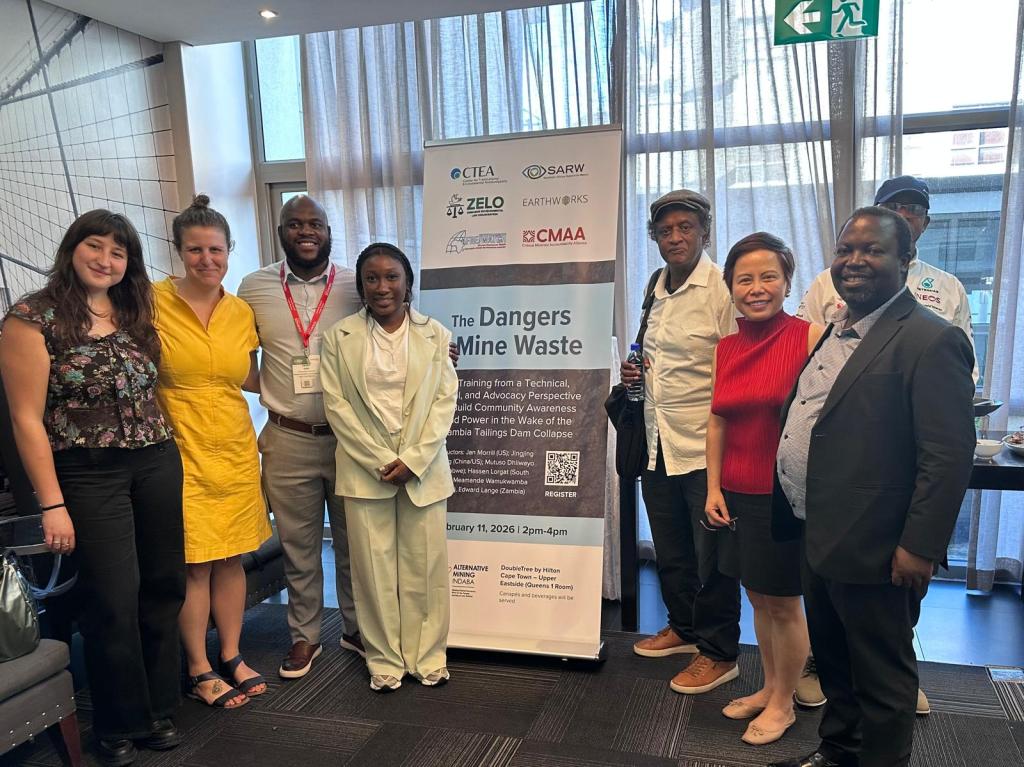
Right to left: Esme, Jan, Obert (ZELO), Kudzwai (SARW), Hassen, Jingjing, Mutuso, Davie (SARW)
Tailings, the mine waste left over after valuable minerals have been extracted, pose an immense threat. As the world witnesses last year in Zambia, when dams storing tailings are breached or collapse, devastation to local communities, waterways, and wildlife ensues. Even when a collapse does not occur, tailings present a constant but overlooked danger by causing air and water pollution, soil contamination, displacement, and more.
To generate greater awareness and power to address this issue, CTEA organized a side event on tailings at the Alternative Mining Indaba with support from our partners at Southern Africa Resource Watch, Earthworks, ZELO, and Afrewatch.
The event brought together a diverse set of experts tasked with introducing the key fundamentals of tailings: what tailings are and the threats they pose, what applicable regulatory frameworks exist, what legal strategies can be employed to respond to tailings disasters, and what barriers exist to community action.
Jan Morrill from Earthworks started the training off with a thorough breakdown of the technical aspects of tailings. She highlighted some critical concerning facts, such as that 13 billion tons of tailings are produced annually and hundreds of thousands of tailings storage facilities exist globally, but no system is in place to comprehensively track them. Mutuso Dhliwayo of ZELO presented the work of the Global Tailings Management Institute, an independent body which will be empowered to audit mining companies’ tailings practices, and illuminated how the institute will offer a new avenue to better regulate tailings.
Jingjing and Meamande Wamukwamba, CTEA’s partner in Zambia, presented the 2025 Sino Metals tailings dam collapse in Zambia as a case study to understand how the law can be wielded to compel accountability after such environmental disasters. In particular, they emphasized the importance of choosing the right clients, jurisdiction, and narrative strategy to win a successful case, and knowing the political climate and motivations of the party being sued.
Edward Lange of SARW detailed some on-the-ground challenges, including the lack of government capacity to oversee tailings facilities and political will to challenge corporations on their harmful practices. To conclude, Hassen Lorgat from the CSO Tailings Working Group advised that communities’ struggles against the threat of tailings do not stem from a lack of knowledge or motivation. It is the asymmetry of power between communities and corporations, governments, and regulators that disenfranchises the former.
The event represented an important step towards driving greater action to combat the impacts of mine waste. It demonstrated that diverse stakeholders and strategies like the law, voluntary standards, and community-led activism must be involved and employed in a coordinated effort. Stay tuned for further actions and initiatives led by CTEA and our partners to organize and mobilize such efforts to take on the threat of tailings.
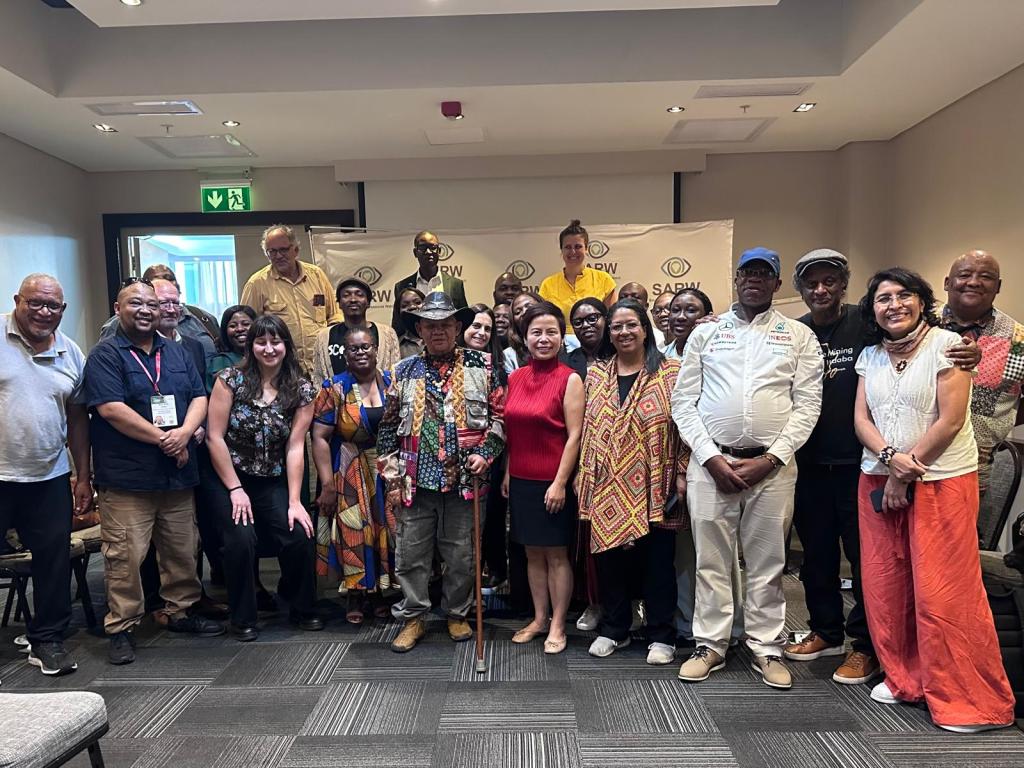
 CSOs 4 Tailings Justice
Leave a comment