MyBroadband, 12 October 2026
By Luis Monzon

A proposal to use 14,000 tonnes of thorium to fuel South Africa’s next generation of nuclear reactors was recently unveiled in the Western Cape.
Thorium is a weakly radioactive metal that is roughly three times as abundant as uranium in the Earth’s crust.
Electricity minister Kgosientsho Ramokgopa attended the opening of the first phase of the Steenkampskraal mine, where its directors presented the proposal.
Ramokgopa announced plans to revive South Africa’s nuclear power programme in 2025, with new nuclear capacity included in the country’s Integrated Resource Plan (IRP).
Gazetted in October 2025, the IRP outlined the government’s plans for South Africa’s electricity generation mix beyond 2030.
The plan envisaged adding around 105GW of new electricity generation and storage capacity by 2039, including investments in gas, renewable energy and nuclear power.
Of that capacity, 5,200MW was allocated to new nuclear power generation, with a separate nuclear industrialisation plan set to assess the potential for further expansion.
Public entities in South Africa’s nuclear industry are actively searching for experts to build this nuclear capacity.
The South African Nuclear Energy Corporation (Necsa) launched an expression of interest in gathering more information on small modular nuclear reactors (SMRs) in April.
Loyiso Tyabashe, Necsa CEO, said that SMRs could contribute meaningfully to the local nuclear industrialisation plan through building local capabilities for nuclear build programmes.
Ramokgopa participated in the opening of the first phase of the Steenkampskraal project in October 2026. He was joined by Gwede Mantashe, Minister of Mineral and Petroleum Resources.
The first phase of the project will involve crushing and milling monazite ore, a reddish-brown mineral that contains traces of radioactive thorium dioxide.
After the ore is crushed, the various minerals are extracted using gravity separation and flotation techniques, preparing them for export.
Robbie Louw, the mine’s executive director, said that monazite ore contains 14.5% total rare earth oxides and 2.1% thorium, the highest-known rare earth grade in the world.
“Far less rock is required to be mined and processed for each tonne of contained rare earths acquired,” said Louw.
Enough thorium to power South Africa for the next 500 years

Louw said that the proposal is to use Koeberg nuclear power station to qualify thorium fuel. This is a process in which nuclear fuel is tested to ensure it is safe to use inside a commercial nuclear reactor.
He said that Steenkampskraal had approximately 14,000 tonnes of thorium, which had an electricity-generation potential broadly equivalent to 55 billion tonnes of coal regularly used at local power stations.
“[The thorium] will then be deployed progressively in a new nuclear fleet, including Thyspunt, and to anchor a South African thorium-fuel industry in domestic demand,” he said.
Thyspunt is the proposed nuclear power station slated for construction near St Francis Bay and Jeffreys Bay in the Eastern Cape.
Ramokgopa provided further details about plans to build the power station in response to a parliamentary question earlier in October.
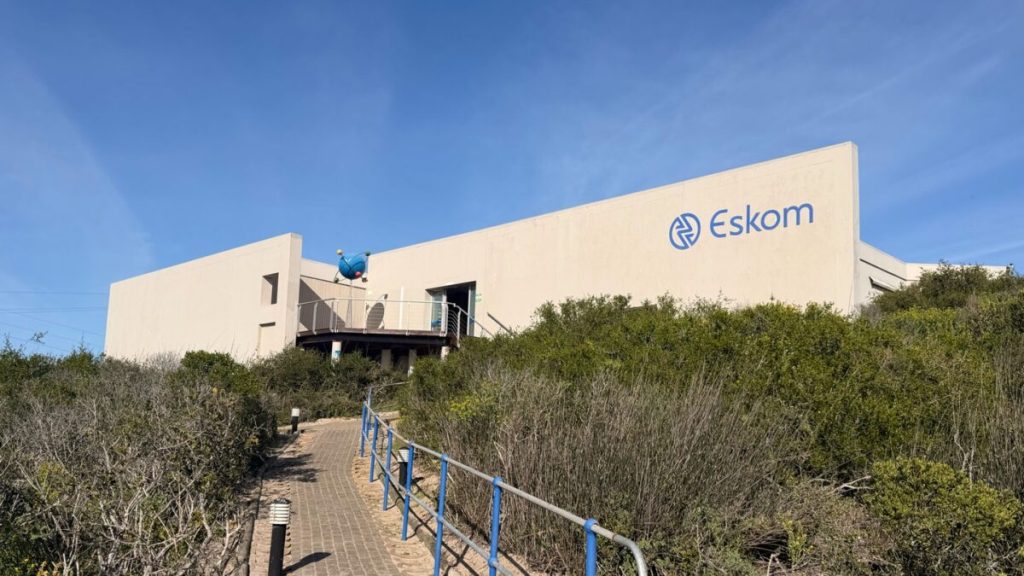
He said the proposed nuclear facility at Thyspunt was still in its early stages, with Eskom yet to select a reactor vendor or finalise the reactor design.
The project had only recently entered the detailed environmental impact assessment phase, while its safety requirements would depend on the reactor technology selected.
Following the initial phase and proposed domestic use of its thorium, Steenkampskraal aims to export the mineral to countries including India and those exploring thorium-based fuel for conventional nuclear reactors.
Ramokgopa said there was an opportunity for Steenkampskraal to be a game-changer, as South Africa had the scientific resources to exploit its yield.
Louw added that in a closed thorium fuel cycle, supplying electricity at roughly South Africa’s current national level would consume only about 30 tonnes of thorium a year.
“Steenkampskraal’s resource alone represents about 500 years of current South African electricity generation,” he said.
Louw said Necsa was prepared to collaborate on long-term plans to beneficiate thorium, including exploring its potential for medical applications.
“Thorium daughter products are being assessed for targeted alpha therapy in cancer treatment,” he said.


Leave a Reply