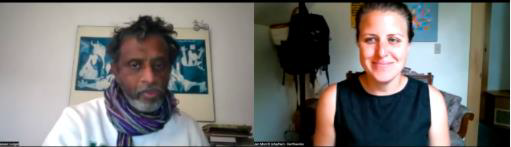
This dialogue is between Jan Morril (interviewee) a Tailings campaign manager at Earthworks and Hassen Lorgat (interviewer) who was previously part of the Bench-Marks Foundation and is now the convener of CSOs 4 Tailings Justice. Date 22 July 2026. Source: Bench-Marks Foundation
Listen to the audio
Read the transcript
“Tailings are dangerous because essentially, they’re kind of these ticking time bombs that are left behind and that at any moment can start polluting or have already started polluting the environment around them.” – Jan Morrill
[Hassen Lorgat] Good afternoon and I guess by you it’s good morning, Jan.
[Jan Morrill] Good morning, Hassan.
[Hassen Lorgat] It’s evening almost. Even it’s our winters, it’s already dark at 5.30 in the afternoon.
[Jan Morrill] we’re in summer, so we have daylight until 9 p.m. now.
[Hassen Lorgat] Over the past year, we’ve been trying to work together on tailings. We will talk about that, but can you tell me a little bit about yourself? Who are you and how did you end up working in this field? And, of course, you work for Earthworks. Who are you guys?
[Jan Morrill] Sure, my name is Jan Morrill and I’m the tailings campaign manager at Earthworks. we’re a U.S.-based organization that works to support communities on the front lines of extraction projects and look for sustainable solutions. So, we work with communities that are facing oil, natural gas, and hard rock mining projects both in the United States and abroad. And I work specifically on issues related to the dangers that mine waste poses for downstream communities and ecosystems for hard rock mining projects. this work is kind of twofold. It is providing direct support to communities that are being affected by mining projects and helping them in advocacy campaigns or elevate their struggles into international spaces. But we also do work on policy. So, “what are best practices around mine waste storage?” “How do we make it safer?” “What do communities need for it to be safer? “And how do we advocate for changes both in the United States and internationally? I came to this work through an experience of organizing with communities in El Salvador. I lived for five years in Central America and El Salvador. And I was working with communities that were struggling to pass the first ever ban on metallic mining and so I helped create international connections between the social movement to ban mining in El Salvador and their international partners and El Salvador became the first country to ban all metallic mining a number of years ago. So that’s how I got involved in this work, through community support.
[Hassen Lorgat] So you come as an expert?
[Jan Morrill] I come as an expert in working with communities that are opposing mining. I’m not a technical expert. I don’t have a degree in geology or geophysics. But I do have a long history of working with communities who are fighting to protect their water and their air and have a healthy environment.
[Hassen Lorgat] This combination between mass action and technical knowledge is, I think, you’ve crafted your skills in that. Very much the kind of work that we are doing also here at Benchmarks Foundation when we work with mining communities. But Earthworks, they work in more than just tailings, no?
[Jan Morrill] Yeah. we have a number of different work areas. we work, for example, with communities in the United States that are either trying to stop proposed mines or trying to have access to remedy for damages caused by mines. We do policy work in the United States around mining law. I have colleagues that do work internationally around issues related to free and prior informed consent. We are supporting the call for a moratorium on deep sea mining.
I have colleagues that work on the connections between the environmental and social impacts created by mining and the push to create electric vehicles and the problems that we push towards a greener economy could create if we keep mining in the same way. So, we work on a whole host of issues that I just focus specifically on, on tailings dams.
[Hassen Lorgat] Okay. Before we get into the detail of a report that we launched, South Africa was the host country. Earthworks and Mining Watch Canada basically launched with us, with FSE and ourselves. The question that I wanted to raise, what excited me about this work? I don’t know whether you can get the word excitement in what tailings is. I don’t know if you can put them together.
[Jan Morrill] That’s a hard sell.
[Hassan Lorgat] Yeah. But the way I see it, the tailings proposals or the standards we recommend are so far reaching that they touch on community’s rights to refuse where tailings should be put. So, there’s a democratic element, the other part of democracy there is that there must be free, prior, informed consent. People need to be told; they need to be resourced. They may be able to call on experts to help them. So that’s the democracy aspect. But there’s also the aspect that the people can organize around this waste and they could, if they’re unhappy, go to the authorities, if you like, and demand, if you like, that this be transparent and there could be greater accountability. And we’re not allowing the bosses, if you like, to simply decide that this is good enough on their own. So, there’s an element of power that emerges there. There’s a need for redress. I mean, that profit is not the motive. I find this quite useful and you and I have discussed it. We think we could work on a lovely toolkit later on. But in terms of values and principles, are you in agreement that these have a great potential to empower citizens?
[Jan Morrill] Yeah, absolutely. And I think it’s an important piece because I think communities affected by mining historically have been very disempowered. So, mining companies are oftentimes supported by governments and come in and impose projects that really don’t benefit the people who are most directly affected by them. So, I think it’s really important to look for tools and ways that we can empower communities to take back control over their wellbeing and livelihoods, essentially. You know, mining is one of the most polluting industries in the entire world. Air, water, soil, that leads to health impacts on both humans and the surrounding environment. And we really try at Earthworks, and I think you’re right, Hassen, that this is the important piece of the work, to look to ways to empower the people that are most impacted to be able to advocate for changes to improve their lives and livelihood. And part of that is giving communities the right to say no to particularly dangerous projects. And then part of it, and it’s a core principle of what Earthworks advocates for, and then part of it is looking for ways to build resources like this report or tools that communities can use to advocate with their governments and the people that are regulating the mining industry to make sure that there are changes so that things either improve or don’t continue to get worse.
[Hassen Lorgat] I mean, for us, we believe that the mining lawyer, the MPRDA, excludes the opinions of communities from the air, from observing how licenses are issued. They’re not factored in and I think it’s the nature of how capitalist mining generally operates. The communities are just the place where they externalize the costs, not really to include them. I don’t know in first world countries whether this is much different. [Jan Morrill] I think it’s a problem across the world, for example, in the United States and Canada, there have been longstanding struggles from particularly indigenous communities who are the most impacted by mining projects to be able to exercise their right for free prior and informed consent. And oftentimes, we’ve seen over the course of history how indigenous rights have been trampled on by mining companies and how they have not been able to defend their resources in their territories. And I think an important piece of that is that often governments are either unwilling or unable to regulate the mining industry. Unwilling because there’s regulatory capture where the mining industry is part of the government agencies or funding part of the government agencies or funding national universities and other institutions that could be independent checks on the industry.
[Hassen Lorgat] In our part of the world, bringing foreign direct investment.
[Jan Morrill] Exactly. And it happens here in the United States as well where government agencies really see themselves as promoting and regulating the mining industry instead of really providing accountability and oversight to protect communities. So, I think that’s a really important piece of it too is that you were mentioning that governments don’t always either have the capacity or the will to really do effective oversight of the mining industry.
[Hassen Lorgat] Let us start on this second edition of a phenomenal report. It’s called Safety First. Tell us, how did it come about?
[Jan Morrill] Sure. So, we at Earthworks have been working on issues related to tailings and the dangers that tailings management pose for a very long time, as have our partners at Mining Watch Canada and the London Mining Network who are also co-authors of this report. And what we’ve seen historically over time is that all the guidelines and standards and regulations that are being developed to supposedly protect and promote safety, don’t go far enough to really rein in the most dangerous mining practices and ensure like we were just talking about that communities are empowered in the process to defend and protect their environment and livelihoods. So, we started to think, from a civil society perspective, working with frontline communities and indigenous peoples and labour unions, like what are the issues that are the most important from that perspective to really start to push for progressive and positive changes in tailings management? And so, we started having these conversations about what needs to be done. How can we make things move towards safer practices? And through those conversations, we began to develop this report that is safety first. We released the first version of the report in June of 2020, so about two years ago. And after we released it, we outlined 16 guidelines that from our perspective were important to really stop the most dangerous practices, make sure that there was respect for communities and hold mining companies accountable. And after we released that report into the world, we got a lot of amazing feedback from affected communities, from indigenous peoples, from technical experts saying, we love your report, but here’s how we think it could be better. So last year, we underwent a process of regional consultations on five continents in, I believe, four languages with about 200 participants, really asking people. So, from your perspective, on the ground, where you live, what do you think needs to happen to make tailings safer? And then we compiled all that information, and we just released the report, as you mentioned, with you all in South Africa. It’ll be three weeks ago now, at the end of May.
[Hassen Lorgat] Let us help our listeners here and our viewers. Simply put, what are tailings?
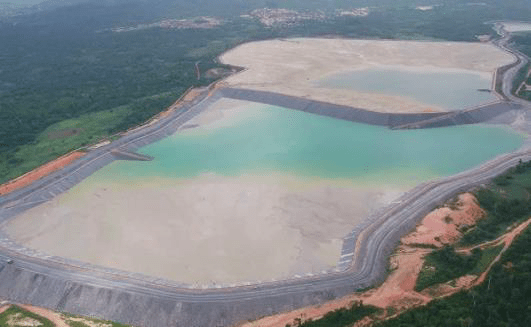
[Jan Morrill] Yeah, so I like to think of tailings as trash, right? Tailings are the trash of the mining process. And it’s one of the forms of mine waste where you have a combination of crushed rock, water, and then chemicals that are used during the processing of the ore. basically, it’s what’s left over after the metal that is being mined is extracted from the rock that was taken out of the ground. And tailings are usually stored behind dams that are structures that are made out of mine waste and other tailings themselves.
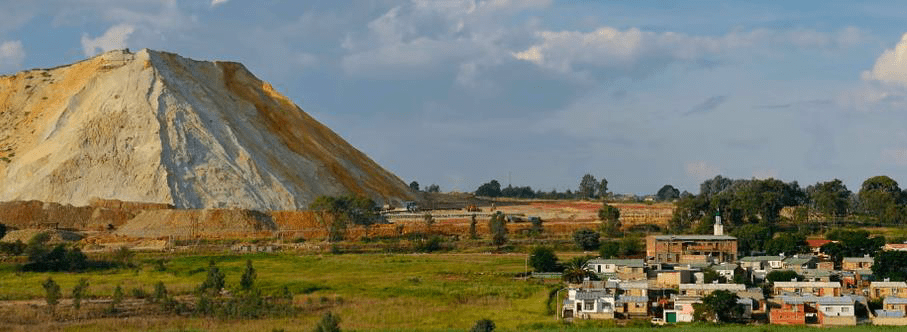
[Hassen Lorgat] So, if you look at Johannesburg and you see the great Vaal Reef, which is the Witwatersrand Reef, you have a lot of mine dumps. We are a 150-year-old mining town, if you like, South Africa. Would that constitute as tailings as well? The yellow sand that’s a mountain?
[Jan Morrill] So, tailings, you know, there’s many different types of mine waste. I believe that the dumps around Johannesburg are tailings dumps. And, you know, I think something that’s important to remember, building off what you just said, is that the other thing is that those are permanent structures, right? So you have 150 years of mining history in South Africa. Those tailings dams have been there since the beginning and they’re going to continue in perpetuity because when a mine closes, they don’t pack up the tailings and move them away or they don’t decommission the dam. They leave that dam there basically forever and the surrounding communities then have to deal with the consequences of that.
[Hassen Lorgat] Well, you know, during the months of August, really our windy months, people’s homes are filled in this area near Soweto. Soweto area, Meadowlands and others, they’re filled with sand going to their homes. Many kids complain of asthma and stuff like it. So clearly, they have life even long after the bosses have gone.
But tell us, so why should we take tailings seriously? I mean, I think we’re entering that area. Why are they dangerous? What risks do they pose? And what are the tailings facilities becoming more and more dangerous? And what are the danger points that we should be looking out for?
[Jan Morrill] I think there’s a couple of important points in this question. Tailings dams are dangerous for a number of reasons. They’re dangerous because, like I mentioned, mine waste tailings will contain the chemicals that are used during the processing of the minerals. So sometimes that’s cyanide, or other chemicals that are then stored there. But also, you know, when you have a mine, for example, a gold mine, when they dig up the ore body, the mining company often is only extracting gold or silver or a couple of different metals. But the ore body itself has many different types of heavy metals. And those aren’t extracted; the company isn’t aiming to extract those. So those are left behind. And they can leach out with over time if they’re exposed to rain and air, those can leach out. And then you have heavy metal contamination or like you were saying with dust, those heavy metals are in the dust particles and then they’re blowing through the air. So, tailings are dangerous because essentially, they’re kind of these ticking time bombs that are left behind and that at any moment can start polluting or have already started polluting the environment around them. Another reason tailings are dangerous is because they are, well, they’re some of the largest man-made structures on the face of the earth, right? there are tailings dams that are almost 200 meters tall. There are tailings dams you can see from space and like we mentioned, they don’t just pack them up and move it when mining ends. But because the dam that is made to retain the tailings is often made out of mine waste and leftover tailings, it can be really susceptible to collapsing, to eroding over time. And if water builds up behind the dam, it can collapse very suddenly and have what’s called a catastrophic failure where all the tailings or much of the tailings are released and start flowing downstream. And so, a really horrific example of this in recent history was in 2019 in Brumadinho, Brazil, a tailings dam failed. It released 9.7 million cubic meters of waste turned into a landslide that flows downhill and killed 272 people that lived below the dam, as well as workers that were present at the mine site.
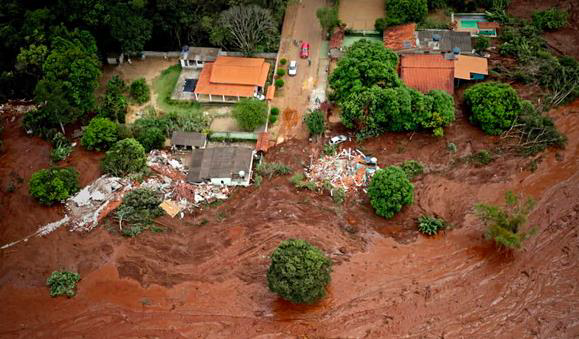
[Hassen Lorgat] And of course, livelihoods and homes and this is more than that.
[Jan Morrill] Exactly and polluted a river. They tend to be near water sources. And so, then people who are fishing, that their livelihood is fishing or who planted crops along the side of the river, now that river is completely contaminated. there’s long-term, slow pollution that can happen, or there can be these really catastrophic accidents. And it’s also really important because research has shown that tailings dams are failing with increased frequency and severity. So, we’re having more failures and they’re becoming worse. And some of the factors that lead into that are, we’ve got larger volumes of waste that are being stored because ore grades are declining. We’ve got companies that are looking to maximize their profits and therefore are decreasing their investment in safety and we’ve got climate change. So, we’ve got more weather, erratic weather patterns. We’ve got more water coming in, piling behind tailings dams. And so, it’s making kind of this like perfect storm to push us towards dangerous situations.
[Hassen Lorgat] Yeah. I mean, you have a number of examples beyond Brumadinho. I mean, of course, we have the South African one, but do you want to give us some examples of where these damages have been caused in other parts of the world, maybe just one or two?
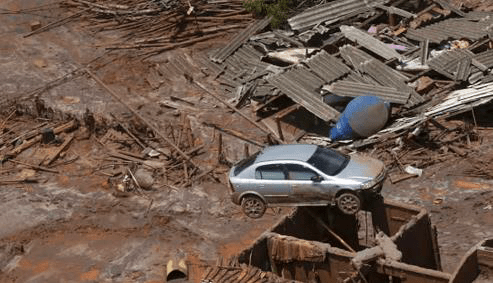
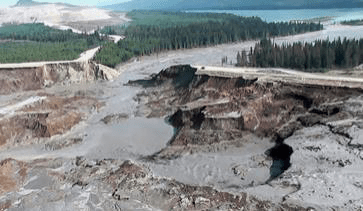
[Jan Morrill] Absolutely. I mean, the biggest ones in recent history besides Brumadinho was also in Brazil, very close to the Brumadinho accident, there was a failure in Mariana at the San Marco mine and this was actually called the worst environmental disaster in Brazilian history, where again millions and millions of cubic meters of mine waste were released. The tailings flowed 600 Km to the Atlantic Ocean. So hundreds and hundreds of Kilometres of destruction covered entire town. And it was really devastating. Another example is 2014 in Canada, actually. A country that supposedly has strong mining regulations. There was a tailings dam failure at the Mount Polly mine, that again, released millions of cubic meters of waste and destroyed some really important salmon habitat, contaminated a local lake, and really impacted indigenous people’s territory, where they were dependent on the natural resources for their livelihoods and survival. So, there’s been, you know, examples in countries in the global north, just as much as there’s been examples of countries in the global south.
[Hassen Lorgat] But we would always believe that you guys have tighter regulation than we have.
[Jan Morrill] That’s a common misconception, and it’s promoted by the mining industry. The mining industry says, look, we have these great regulations in the United States and Canada and Australia, and therefore, we have everything under control. The United States, our mining law is from 1872. Our mining law is 150 years old. It has gaping holes in it in terms of protections for safety, for environmental issues, even for things like taxes and funds for local governments around the mining industry. It’s not that the US and Canada are not leading on mining regulation.
[Hassen Lorgat] Yeah, Before we move on, we had our own disaster, the Zululand anthracite colliery, you know, the coal mine in KwaZulu-Natal, where one and a half million litres of polluted mine waste burst from its slurry dam, and it was on Christmas Eve, and clearly, the heavy rains, it was already the beginning of the heavy rains, and it just burst open, and this was dealt with. It was 2021 in January. The community, if you like, were the last to be informed what was happening. So clearly, some of these pointers here are some of the things that you guys are addressing in the recommendations.
So let me just go on, if a dam could damage the tailings facility, the tailings dam, clearly, there must be a problem where it is built, where this water is coming from, from the mountains, heavy rains, whatever, it affected animal life, the works, and the nature reserve. So, you guys have an issue about where dams are supposed to be located, no?
[Jan Morrill] Yeah, so that’s a really important point, is that if a failure at a tailings dam would create some sort of unacceptable risk to downstream communities or important watersheds, then it shouldn’t be built in that location. There needs to be consideration of the distance between communities or important natural resources and tailings dams, because like we said, they last forever. And so, if a mining company is not going to be able to maintain and monitor their tailings dam forever, then there needs to be some sort of consideration before it’s built about the resources that are around it. And one of the things we say in the report is that there needs to be a study done and that communities and local governments need to decide together whether the risk of the tailings dam is acceptable. And there are certain things that certain places where tailings dams just shouldn’t be built ever. And communities and governments or communities specifically need to have the right to decide where those are.
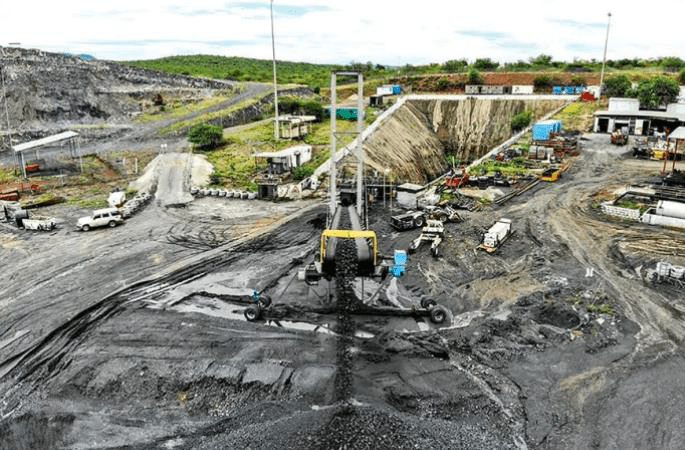
[Hassen Lorgat] How many tailings dams are there in the world? Is there any inventory or some record keeping? Who are the parties that we have to engage with? I mean, we can say the bosses in that. Can our work be made easier? Is the ICMM up to the task? I mean, they’ve got their own standards. How do we engage them in this challenge to make sure that lives are saved?
[Jan Morriill] Yeah, it’s actually surprising that there’s no global inventory of tailings dams in the world. So, we don’t know how many there are. The estimates that researchers give are between 20 and 30,000 scattered across the globe. Some of them are active mines. Some of them are abandoned. You know, the mines have closed up long ago and there’s a tailings dam there and no one’s really paying attention to it anymore. Just in the United States, we have hundreds of thousands of abandoned mines. But there’s no system for tracking them. And right now, there’s an initiative that’s being organized by the Church of England’s Pension Fund and investors that are part of Principles for Responsible Investment to create a database. But it’s very early days. It’s only got, I think it’s got like about 1,500 registered tailings dams and it’s all self-reported. So, it’s really relying on mining companies to give this information over. One thing that we’ve seen a lot is that mining companies don’t like to share that information very often. And mining companies don’t even like to share information about things that are critical to safety, like when a tailings dam fails. So, like with the example you were giving of the recent failure in South Africa, the community didn’t even know. And oftentimes there will be failures at tailings dams. And mining companies will not tell anyone. They won’t tell the government, or they won’t tell the communities. And so, one of the things that we say in Safety First and in our guideline around access to information is that mining companies have to report publicly every time that there’s a tailings dam failure, how much tailings are released, what are the potential impacts and everything that they know about it.
[Hassen Lorgat] So, here’s the thing then. There are about 16, a dozen and somewhat recommendations that we should be struggling over. And there’s a question about how we as a movement can use this to improve our lives. What do the authors think? We will go later to what these principles are or action points. But what was your intention when you met with other experts and activists? How do they want this report to be used?
[Jann Morrill] Yeah, so we’re really hoping that this report can be a tool for communities, for indigenous peoples, indigenous nations, for workers, for frontline NGOs to advocate with their governments, with their regulatory bodies, maybe with the mining companies themselves to improve safety. So, we think that it’s important that like we talked about earlier, you and I, that communities have access to the resources that they need to effectively demand changes. And so, we hope that the 17 guidelines that are in the report can kind of help communities figure out what are the things that we want to work on in our local context or what are the things that we want to address here.
[Hassen Lorgat] So, you’re not saying to a community that all of them apply equally to every community.
[Jan Morrill] I mean, there might be instances where something’s not relevant. So, for example, we say in, we say that mines should not be or tailings dams should not be used, sorry, should not be built using a specific type of construction method, which is called the upstream construction method. But that’s been banned in Ecuador and Chile and parts of Brazil. So, communities in those areas aren’t going to, that’s not going to be relevant for them because that’s not something that they have to deal with necessarily. But they might really want to use the guideline around access to technical assistance, for example.
[Hassen Lorgat] So, it is really a toolkit that they can take what is applicable, you know, and of course, as we discussed earlier, it’s a democratizing campaign model that people can use where applicable.
[Jan Morrill] Yeah, exactly.
[Hassen Lorgat] So that’s how you guys saw it then. So, we will do that.
[Jan Morrill] But I would just add that in terms of, because there’s a lot of standards that have been developed around tailings management by the mining industry or by other international bodies. And we do say that any standard that’s developed, that’s intended to be comprehensive, if it doesn’t include all 17 of the guidelines that we’ve outlined, it’s not good enough. It’s not going far enough.
It’s not protective enough. So, while communities can kind of pick and choose based on their local realities, what pieces make the most sense for them, internationally, policy-wise, industry-wise, everything needs to be included.
[Hassen Lorgat] That’s interesting because you say industry-wide, but who are the standard bearers of this? The UN or who? Who maintains that? Because the corporation, then the corporate lobby is so powerful, even within the UN.
[Jan Morrill] Yeah, so after the Brumadinho tailings failure in 2019, there was a process that was formed called the Global Tailings Review. And it was co-convened by the United Nations Environmental Program, by Principles for Responsible Investment, which is this group of investors that are interested in this issue and then by the ICMM, which is the Mining Industry Trade Association. And through that process, they developed what’s called the Global Industry Standard on Tailings Management. So, it’s the first of its kind global tailings standard. We compared it to safety first, and it definitely falls short on a lot of the recommendations and guidelines that we have. Also, we were disappointed that a lot of the participation during the public comment periods of civil society groups was not taken into account in the final draft. So, we think that the standard really doesn’t go far enough. But this was the first kind of attempt and iteration at global management.
[Hassen Lorgat] Maybe, I mean, for the time that we have left, maybe you should try and run us through some of these principles and hopefully time permitting we will look at a concrete example. Just, we can pick up one from our groups we work with, just to see how they apply it. Let’s kick off, so what is the first one, clearly.
[Jan Morrill] Well there is 17 guidelines, and maybe what I’ll do is break them down into like blocks and make it all…
[Hassen Lorgat] But Jan we made a promise to each other, that we going to try and group them later on, into families of rights, not in this discussion. Today, it’s very important for us to understand them in their own merits. But later on we will get them into families of siblings coming together. The more democratic ones, these are what, fighting for regress, etcetera, etcetera.
[Jan Morrill] So maybe some overarching areas, so the one overarching area, is that communities, need to be empowered and have their rights respected. So we have a guideline that says that communities must provide consent for any tailing’s facility, over the life of that mine. so that means communities have the right to say no, if they don’t want a tailings dam facility to be built or they have the right to say yes, if they think that it’s appropriate, that process for determining consent can often be manipulated by mining companies. So, we say that it needs to be free of external manipulation, cohesion and extortion. It needs to be conducted with all affected community’s languages that they speak and respecting their cultural norms and that communities have the right at any moment to revoke that consent, if they decide that the mine’s tailings dam is too risky. we also say that communities need to be involved in emergency response planning, so from the beginning of the construction of the tailings dam, because if there is a catastrophic failure, communities need to know, both what to do and they need to have been part of the process to decide their response, so that it’s an appropriate response.
[Hassen Lorgat] Jan, let me intervene there. It is almost like a no brainer; these are the people who are going to die, why exclude them, In their own lives.
[Jan Morrill] Exactly, it’s kind of shocking how little mining companies involve communities. For example, there is a mine in the United States where we heard that, they were going to expand their tailings dam and so they had to create an emergency response plan and so they held a public meeting and they said, this is the emergency response plan and they gave everybody magnets to put in the fridge of like, “if there’s a tailings failure, make sure to evacuate” that’s not appropriate, that’s not codesigning a plan with the community, to show up afterwards…
[Hassen Lorgat] That was part of the response team?
[Jan Morrill] Yeah exactly! it seems like a no brainer, but it’s almost never really been done. In a true way, where communities have the power to make decisions and recommendations and have …
[Hassen Lorgat] I stopped you, and I don’t want to do that because we have to come back, it seems like there’s a priority on profit but I’m sure it’ll come through on some of your recommendations.
[Jan Morill] yeah, but lastly kind of on the respect for community peace, we have a guideline, stating that communities need access to information. Mining companies often times aren’t providing accurate or up to date or sufficient information. And communities need to be able to know what’s happening, we also say that communities should have access to technical assistance, so when you get these documents, sometimes the community doesn’t have the internal capacity because maybe it’s geophysics, its engineering. So, we say that communities should be able to request independent technical experts to help them understand the information.
[Hasssen Lorgat] And it’s paid for by the corporations; I guess or by the government?
[Jan Morrill] Yes, we say that it should be paid for by the mining company, but the communities or the local organisations should pick the experts themselves. So, the mining company can pick an expert, but they should pay. And then lastly, we say there should be mechanisms in place for grievances. So, if the company is doing something that the community or workers or anyone that is affected by the mine, feels as if it’s inappropriate or dangerous, there should be a way forward for people to complain about that and that process should be independent from the company, they shouldn’t just complain to someone internally. [Hassen Lorgat] so like the human rights commission or …(inaudible) office
[Jan Morrill] Or like a third-party firm that’s paid for by the company.
[Hassen Lorgat] But not controlled by the government?
[Jan Morrill] Not controlled, it needs to be functionally independent and going to your point about profits. So, one of the first guideline, is that safety needs to be the guiding principle and design construction maintenance of closure of any tailing’s facility over profit. Because from what we’ve seen is that mining companies chose the cheaper solutions, over the safer solutions for tailings management. so, our guidelines have specific mandates around what types of technologies companies should use. So, avoiding the most risky technologies, often for the safer technologies. We have guidelines around certain pieces of how dams should be constructed. We have guidelines around monitoring, so what type of monitoring system is appropriate, it needs to be adaptable, constant, it needs to respond to changes as they happen. We also have guidelines around design, if a tailings dam could affect human life, it needs to be designed in certain way, that is more protective and safer. And then we have guidelines around how mines should be closed, so companies should be able to
just walk away from a tailings dam, they need to make sure that they are either monitoring it until the chance of failure has been reduced or eliminated. So, we have a number of guidelines in the document that really try to move away from this mentality of reducing the amount spent on tailings and really prioritising investments in safe technologies and practices.
[Hassen Lorgat] So, clearly Canada, Australia the US, South Africa and the UK are old mining countries, have you got recommendations that touch on our situation. So, we’ve got these old mines that may have 40 years left in terms of Gold and others that may have 200 years in terms of platinum, so do you have recommendations that may fit both situations. new mines, old mines.
[Jan Morrill] Yeah, I mean we have recommendations for new mines, about how they should be built and we have recommendations for old mines, we talk about when specific mines should close, about how they should be closed and also the community peace is across the board, irrespective of whether it’s a foreclosed mine or an operating mine communities need to be involved in all that.
[Hassen Lorgat] There you’re touching on this oversight and regulatory bodies. The regulatory bodies here are shambles, I know in the US, they consciously wiggle them down and here they haven’t really started to have teeth, it’s quite important that state regulation bodies have clear independent power to investigate and take the necessary actions. They must also have resources to do this job, can you talk a little bit about this.
[Jan Morrill] Yeah, I think that’s really important. There needs to be independence between the regulators and the mining industry and often times what we see in the United States, and I don’t know about the context in South Africa, but I wouldn’t be surprised if they were similar. That there is a revolving door between people that worked in the mining industry and people in regulatory bodies are supposed to be overseeing the mining industry and so regulators will go from working for a mining company to working for the government and maybe back to working for the mining company again after leaving the government and that creates this kind of unhealthy relationship between the industry and the people that are supposed to be overseeing it, so there needs to be that independence. and like you said, there needs to be proper resources for government to truly provide that oversight, another example in the states, a number of times, regulatory bodies are funded by the industry they are overseeing. So that obviously creates, a whole list of problems as well, so there needs to be some sort of independent funding stream that’s coming from tax revenues or other government sources. But then one piece of oversight I think is very important, is that yes there needs to be this independent regulation but mining companies also need to have oversight structures built into the company themselves and the most important body that is that is able to do that, is the board of directors, so the board of directors needs to be actively involved in making sure that tailing dams are safe, and so that can be a number of things that can … making policies around tailings safety, approving budgets that ensure that mining companies are dedicating enough resources to tailings safety, as well as having people on the board that know things about tailings, disaster and hazard response so that there is a check, on the staff of the mining company from the board to ensure that the best practices are being followed
[Hassen Lorgat] But Jan you know in my other life as a unionist, I was impressed with Canadian law, where in health and safety the CEO was responsible in the corporation, the worker at the bottom of the pattern, when something happens the CEO is responsible and that level of accountability is really important, so I take that point. But we need to try and move on here, regarding mine closures and these guys that have scorned, our order to general was very critical to the department of minerals and resources, the DMRE and saying that they were asleep, they have not done this properly. And I just can’t understand why the CEO and the board of directors who have sold off a company or have not closed properly are probably living off the profits, you can find them, where’s the political world man, can you talk a little bit there and we need to start moving our closing points.
[Jan Morrill] yeah, I think there’s a couple of pieces, in one of them is the need for financial securities around mine closure, so what we see a lot across the world is that a lot of times in order to avoid investing the money, in closing the mine, a company will declare bankruptcy or they’ll sell to some junior mining company that doesn’t have the money for resources.
[Hassen Lorgat] And in our country, they’ll sell to a black mining group and call it economy empowerment.
[Jan Morrill] Exactly, and what’s that really doing is just passing the buck on their financial responsibility to close the mine. So, we say in our report that there should be financial assurance for mine closure provided upfront, so that means when a mine gets its permit, it deposits the appropriate amount of money necessary to close the mine in a bank account.
[Hassen Lorgat] It must be real money not the imaginary or theoretical money.
[Jan Morrill] Exactly, no self-bonds, no self-guarantees, real money in a bank account or bonds that the government can access if the mining company doesn’t close the mine and that amount needs to be assessed over the life of the mine, it needs to be updated, it needs to account for inflation, so if the company goes bankrupt or disappears at the end of the mine, the local government isn’t left with this liability that they don’t have the funds or resources to deal with, so that’s one really important piece. Another really important piece is that there should be insurance, mining companies should have public liability insurance, over the life of the mine, so that if it happens that there is some sort of policy to compensate communities or cleaning up environmental damage, again so that it’s not the government trying to do it because there is a bankrupted mining company. One interesting thing, law we’ve seen in the United States, I’m not sure if this is applicable in other countries or not, in the state of Montana they have what is called a bad actor law, so that means that if a mining company doesn’t properly close a facility or if there is documentation of them not taking care of a mine site or abstaining from their responsibilities, the corporate executives from that company cannot get another mine permit in the state.
[Hassen Lorgat] So it’s a blacklisting?
[Jan Morrill ] It’s like blacklisting, exactly, so you can’t just bankrupt one company, and everybody moves and open up a brand-new company with a brand-new name. It’s really important not letting mine companies move from company to company to avoid responsibility.
[Hassen Lorgat] Of cause they think they are sparing wealth and prosperity, we see them as spreading harm and danger and risk. But anyhow I would like before we talk about where the tailings management to go next, what are the big issues undertaken to move us forward. I’ve shared in the chat the Sibanye Stillwater group, if you want to share that as a slide, maybe let’s talk to see concretely in South Africa, how some of these principles we’ve discussed may become applicable to Sibanye Stillwater people, if you want. It’s the company that bought the Lonmin who were responsible for the Marikana massacre where at the end of day 44 workers died, 34 by police and the others by some means, could you talk me through this because for the uninitiated it looks beautiful, its transparent, it’s on their website you can find it, so to some level they deserve some points and I don’t know if the transparency is deep or sufficient enough or how mining activists can use this because I don’t know if they include it here, could you add any points.
[Jan Morrill] Sure. To say before we start that, I am not particularly familiar with this company, I know a little bit about its mines in South Africa, I know a little bit about its mines in Montana, in the United States, so I have the basics but then again, I haven’t done a deep dive into this, so I’m not familiar, but looking at this and what stands out to me, one is that the company is really committing to the global standard of tailings management, which we discussed that, they are trying to promote that here’s the standard, but we know that the standard doesn’t go far enough in terms of community protection and environmental protection, another piece that stood out to me, is that they talk about how the facilities in South Africa use the upstream dam construction method and we just spoke about that we say in safety first that all upstream tailing dams should be closed so that’s one red flag right there. I would like to see particularly about how they are accounting on climate change in their tailing’s facilities a grand example is that there was extreme flooding in Montana the last couple of weeks and Sibanye Stillwater had to close one of their mines because the access roads to the mine had been washed out. So, it’s in a place where there have been extreme climate changes and I would like to see on their website transparency and more information about how they are accounting for climate change in their mines.
[Hassen Lorgat] I would like to add the issue about community participation and consent; it looks like communities don’t feature in here, it’s just done by their experts, what about the experts and principles we spoke about earlier.
[Jan Morrill] That’s a good point. It would be good to see how communities are consulted, how much information they are given, are there documents reviewed by independent experts.
[Hassen Lorgat] It doesn’t seem like there seem to be any role by the DMRE, that this report has been sent to them, there needs to be another arbiter because corporations are good at corporate spin as well and we know that our department is not that strong but at least a third party and there must be reports sent to it, or to say that there has been reports sent to it. Anyhow we are just touching this to show how activists can best apply these principles. But let’s end off with what is to be done at this movement, where should the movement go, how tailings become a focal point, how are they managed and how they come to the agenda to improve people’s lives and stop people from getting harmed.
[Jan Morrill] I think the first thing to acknowledge and highlight in our report is that the safest tailings facility is the one that isn’t built, so permanent, above ground tailings should be the last resort, we need to look for ways to reduce mining, to reduce new virgin mining particularly and we need to look for ways to reduce waste created at the mine site and it’s really important that as a society particularly countries in the global north, need to identify ways to actively reduce dependence on metals. That means how we structure our cities in terms of creating more access to public transportation and less dependency on cars, moving from dependency on single car ownership or single vehicle ownership and looking at ways we are designing products to be recycled, so we can recapture materials, from electric batteries for example or lithium batteries and moving towards more circular economy solutions, so that we are not just consuming and building new mines and creating more waste we really need to move from that model first.
[Hassan Lorgat] That’s why I like the idea of the north, south civil society partnership and not to say that you guys are the beast, but clearly major consumers are there and the US in particular and we need to try and find this balance and of cause in our own country the middle class are the bigger consumers and the poor class get nothing and they bear the burden of the bad, aired pollution, the suffering and the waste. Maybe we need a better solution than what has been offered, and I think that this report makes a great step forward our next challenge is to of cause to take it to them by building national campaigns, continental campaigns and maybe when they try to have a jamboree in the annual mining Indaba here in Cape town, we should take this to them, to negotiate with them and not that they come and speak to civil society and take over civil society meeting but we tell them in these areas, these are the following tailings dams that you have failed at in line with your principles which are low and worse still compared to ours which are higher. any last words that you want to say?
[Jan Morrill] Reflecting on that, there is a lot of work that still needs to be done and that as civic society, we can do to push for better international oversight. Right now, there are discussions around forming a billboard tailings management institute that will be housed at the UN in the efforts of being led by the UN and investors and its very important and critical that, that body is a multistakeholder body that gives power, especially discussion making power to communities to workers.
[Hassen Lorgat] Jan I just want to say, be a multi-stakeholder or not at all, because the bosses have their forums already.
[Jan Morrill] Exactly and we don’t need another corrupted industry run institute, so I think there’s work that could be done and that the institute could be a resource for both the community and governments, in ways to improve their regulations because we know that regulation is the best way to improve safety and so that is a really critical step that needs to happen moving forward.
[Hassen Lorgat] Anyhow, where can people get these documents? The Benchmarks foundation will have it on their website I’m sure it’s on the Earthworks, Mining watch Canada
[Jan Morrill] If you go to https://earthworks.org/resources/safety-first/ the full report is there, we also have a summary table of the guidelines, because you know the report is 50 pages, but we have a summary of it, we have some graphics and we are also in the process of creating materials that are supplement materials that can be more useful to day to day work and advocacy and the original report has been translated to Portuguese, Spanish and Indonesian. We’re currently working to translate the updated version to those 3 languages as well as French and Turkish so those will all be up on our website too, once they have been translated.
[Hassen Lorgat] That’s great, True international effort. Thank you very much.
[Jan Morrill] Thank you.
[Hassen Lorgat] You will have a great day, and we will have a great evening, Thank you.


Leave a Reply