

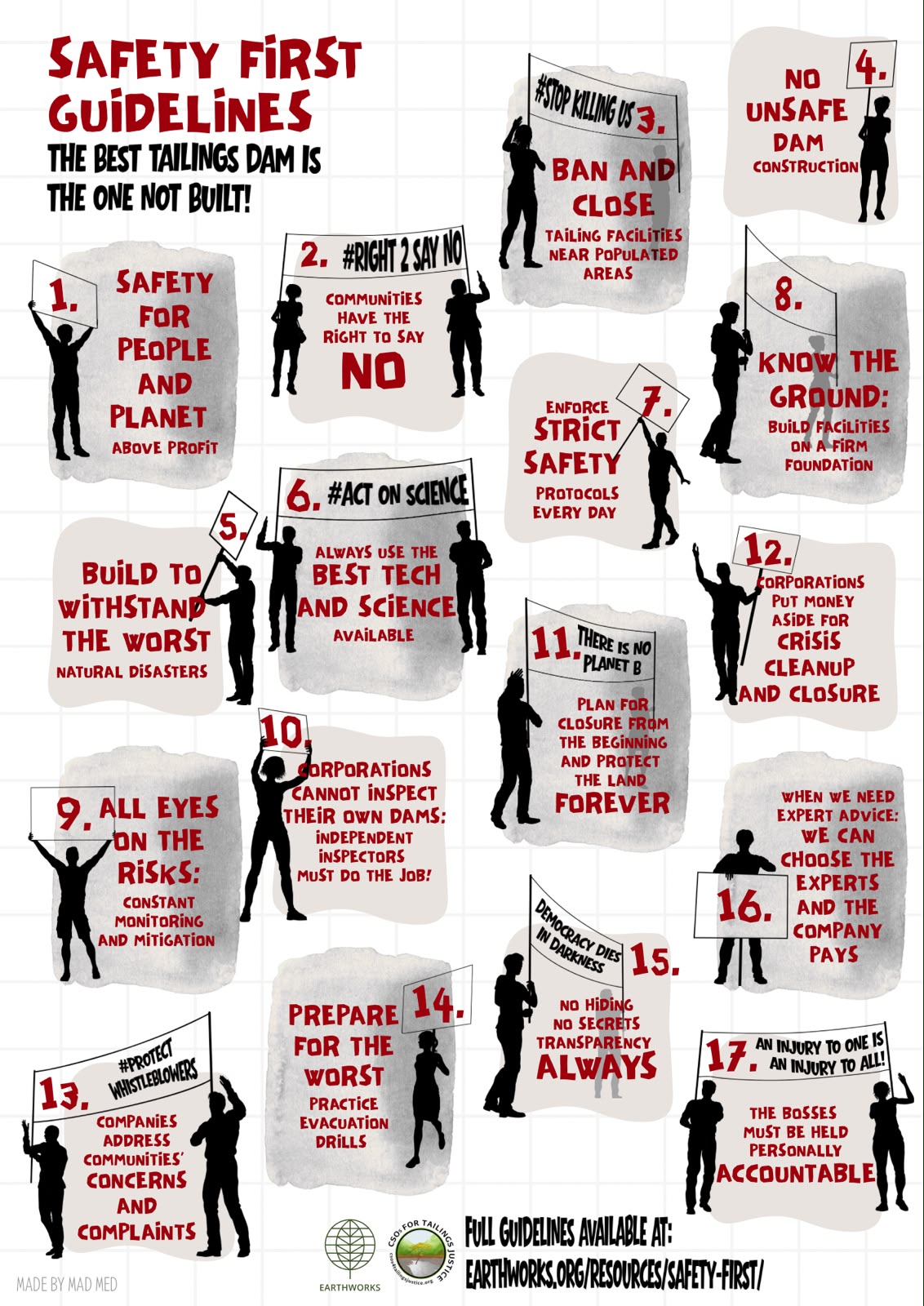
Download the Safety-First Guidelines: 17 principles
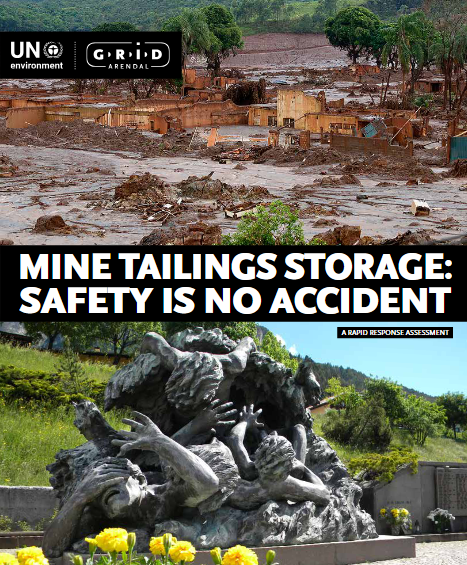
UNEP: Mine Tailings Safety Report
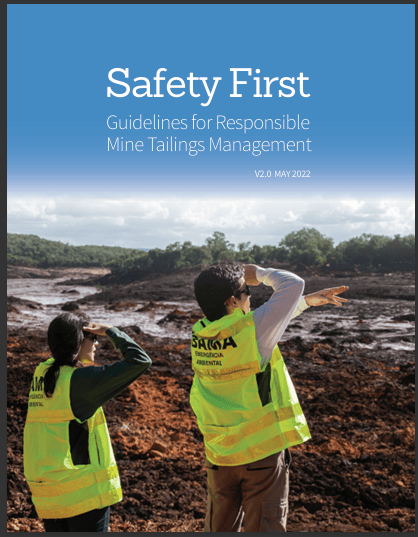
Safety Guidelines for Tailing
Mines must register tailings dams to ensure compliance: Wally Ramokopa
SABC, 29 April 2023
Interview Transcript
[Speaker 1: Francis Herd (interviewer), SABC Digital News]
Welcome back. The Department of Water and Sanitation is updating a database of all tailings or mine residue deposit dams in South Africa. It has called on mining houses that have not registered their dams to submit the information in order to be classified as dams with a safety risk.
Now, tailings dams are used to store water and by-products or waste material from the mining process. In September last year, the wall of a tailings dam collapsed in Jagersfontein in the Free State, resulting in a fatal mudslide.
To discuss this, we’re now joined by the department’s Dam Safety Regulation Director, Wally Ramokopa. Mr. Ramokopa, thank you for being with us. You’re acting now, but Jagersfontein happened last September. Why didn’t you act then? Or, in fact, many would argue, way before that?
[Speaker 2: Wally Ramokopa (interviewee), Director of Dam Safety Regulation]
Thank you, Francis.
Francis, we have been regulating dams that are classified as having a safety risk, including some tailings dams. However, not all mining houses have been able to register their dams with the Department of Water and Sanitation to be classified as safety risks.
In our database, we have about 337 tailings dams, but most of them — about 180 — were too small to be classified as dams with a safety risk. By that, I mean a dam with a minimum vertical wall height of five metres, capable of storing more than 50 megalitres of water or what we call “water-containing substance.” In this case, tailings are considered a water-containing substance.
So, we do have a database, but not all mining houses have come forward to register their dams. Hence, the department is calling on them to do so. We will also be using the database we gathered from the Department of Mineral Resources and Energy to identify other dams not yet in our system, so they can be regulated.
[Speaker 1: Francis Herd]
Okay, and they’re required to register by law, right? So you’re just saying, “Do the right thing”?
[Speaker 2: Wally Ramokopa]
Yes, we’re saying, “Do the right thing.” But many tailings dams were not registered when they first started operating. The law requires that as soon as a dam meets the criteria to be classified as a safety risk, the owner is obliged to register it within 120 days.
[Speaker 1: Francis Herd]
Someone at a mining conference earlier said there are thousands of tailings dams, and given the history of mining, many have been forgotten. We have no idea of the risks associated with them. Do we even know how many tailings dams there are, what the dangers are, and what if people don’t come forward to register?
[Speaker 2: Wally Ramokopa]
Yes, Francis, it’s also important to note that some tailings dams no longer have the capacity to be classified as safety risks because the material has consolidated and dried up and cannot flow — as we saw at Jagersfontein. When mines close, the tailings are left to consolidate, so they may no longer meet the requirements.
So, there may be thousands of tailings dams in South Africa, but many do not meet the registration criteria. We only register those with the capacity to store more than 50,000 cubic metres of water-containing substance.
To answer your question: we really don’t know how many tailings dams are out there. That’s why we are calling on mining houses to come forward. The department will also begin enforcement processes to find those who have not come forward and determine why their dams are not classified. We rely on engineers working for the mines — those with knowledge of dam engineering — to assist in registering these dams.
[ sabc interviewer: Francis Herd]
The concern has always been that old mines were never closed properly, posing risks to our underground water resources, and that we don’t really know what’s going on. So, my question to you overall: does the department have the capacity to regulate this and get a handle on the situation?
[Speaker 2: Wally Ramokopa]
Yes, the department does have the capacity. We have a Water Use Authorisation unit that licenses these dams, and we monitor them. We also have a Compliance Monitoring and Enforcement unit that visits mining houses on our register each year.
However, there may be others operating illegally because they didn’t register. The department is very strong on enforcement, including administrative and criminal action. We have capacity in our regional offices across the country and a database of dams. But again, not all tailings dams meet the requirements.
[Speaker 1: Francis Herd]
Can you update us on the fallout from the Jagersfontein dam tragedy? I believe the Star Gems Group was involved. Has the company been held accountable?
[Speaker 2: Wally Ramokopa]
Yes, the Deputy Minister of Water and Sanitation, Minister Mahlobo, opened a criminal case in Jagersfontein. The department is also conducting an independent forensic investigation into the cause of the collapse, so that those involved in the disaster can be brought to book. We are working together with SAPS and our enforcement unit.
[Speaker 1: Francis Herd]
But why isn’t that wrapped up yet? We’re six months down the line.
[Speaker 2: Wally Ramokopa]
Yes, there are many processes that still need to be completed, including careful investigations. We must be thorough so that we don’t lose cases on technicalities. The work has been ongoing, though it’s been slow.
The mine was also instructed to appoint an approved professional person to ensure that the tailings in other compartments at Jagersfontein are safe, so that people can be allowed to move back into their houses while the mine proceeds with reconstruction.
[Speaker 1: Francis Herd]
Very quickly — I was interested to see a Business Day report about Wits University academics using satellite imagery to identify structural problems with that dam. Will the department use satellite footage in the future?
[Speaker 2: Wally Ramokopa]
We will rely on other stakeholders, such as universities and overseas entities that monitor tailings dam movements worldwide. We are aware of such studies, and some of that information will be used by our forensic investigators to see what movements might have occurred prior to the failure.
A tailings dam failure doesn’t happen overnight — it is usually a gradual process. Unfortunately, the disaster happened on 11 September 2022, but it must have been monitored by others over time. We will engage stakeholders who have information that can assist us.
[Speaker 1: Francis Herd]
All right. Thank you for the update, Director for Dam Safety and Regulation from the Department of Water and Sanitation, Wally Ramokopa.

